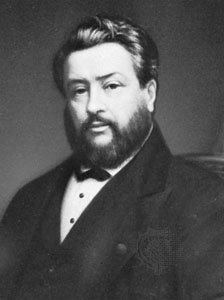
"A dog barks when his master is attacked. I would be a coward if I saw that God's truth is attacked and yet would remain silent."
John Calvin (1509-64)
Showing posts with label Sola Fide. Show all posts

Tuesday, May 12, 2009

Only Christ Justifies

"Therefore as by the offense of one upon all men to condemnation, even so by the justification of One upon all men unto justification of life." This "offense of one," if we are bent on "imitation," can only be the devil’s offense. Since, however, it is manifestly spoken in reference to Adam and not the devil, it follows that we have no other alternative than to understand the principle of natural propagation, and not that of imitation, to be here implied. [XIV.] Now when he says in reference to Christ, "By the justification of one," he has more expressly stated our doctrine than if he were to say, "By the righteousness of one;" inasmuch as he mentions that justification whereby Christ justifies the ungodly, and which he did not propose as an object of imitation, for He alone is capable of effecting this. Now it was quite competent for the apostle to say, and to say rightly: "Be ye imitators of me, as I also am of Christ;" but he could never say: Be ye justified by me, as I also am by Christ; — since there may be, and indeed actually are and have been, many who were righteous and worthy of imitation; but no one is righteous and a justifier but Christ alone. Whence it is said: "To the man that believeth on him that justifieth the ungodly, his faith is counted for righteousness." Now if any man had it in his power confidently to declare," I justify you," it would necessarily follow that he could also say, "Believe in me." But it has never been in the power of any of the saints of God to say this except the Saint of saints, who said: "Ye believe in God, believe also in me;" so that, inasmuch as it is He that justifies the ungodly, to the man who believes in him that justifieth the ungodly his faith is imputed for righteousness. [Saint Augustine's Anti-Pelagian Works, A Treatise on the Merits and Forgiveness of Sins and on the Bap, Book 1, Chapter 18 - Only Christ Justifies]

Sunday, May 10, 2009

The Objection to the Concept of the Imputation of Christ's Righteousness

-Jon Irenicus

Just as it is sometimes argued that Christ cannot die in our stead, it is also argued that his righteousness cannot be imputed to us (Hi, Nick!). There is objection to the idea that we can bear his righteousness. One person cannot be good in behalf of another. We are totally responsible for ourselves. Transferring credit, as it were, from one person to another is a very external and formal type of transaction, quite inappropriate in the matter of our spiritual standing before God.

This objection would be to considerable extent valid if our relationship with Christ were this detached and he were quite aloof from us. It would be as if a total stranger paid the fine of a convicted criminal.

But such is not the case with believers for we are actually united with Christ. As we will see even more completely when we examine the doctrine of justification, the imputation of Christ's righteousness, and of what was accomplished by the atonement, is not an arm's-length transaction. Rather, it is a matter of two, Christ and the believer, becoming ONE in the sight of God. Hence, Paul is able to speak of the believer's having died with Christ and having made alive with Christ (Rom. 6:3-4).

It is as if, with respect to one's spiritual status, a new entity has come into being. It is as if CHrist and I have been married, or have merged to for a new corporation. Thus, the imputation of his righteousness is not so much a matter of transferring something from one person to another, as it is a matter of bringing the two together, so that they hold all things in common.

In Christ I died on the cross, and in him I was resurrected. Thus, his death is not merely in my place, but with me.

____________

Saturday, May 09, 2009

Yes, we are actually Justified by Works... ALONE!

-Jon Irenicus

Challengers of the doctrine of Justification by faith alone (or sola fide) will every now and then quote Revelations 20:12 to assert that God will actually judge all men according to their works. This particular verse, according to their interpretation, clearly states that faith alone is insufficient for man as means through which salvation is obtained, and must be coupled by human works (or good deeds) in order to have a good standing before God in the Day of judgment. Revelations 20:12 says,
  • "And I saw the dead, small and great, stand before God; and the books were opened: and another book was opened, which is the book of life: and the dead were judged out of those things which were written in the books, according to their works." Rev 20:12 (KJV)
Does the above passage actually refutes the doctrine of justification by faith alone? If not, then how can we reconcile the seeming contradiction? Is salvation really by faith alone apart from works? or faith PLUS works?

It is true that everybody will be judged by God someday ACCORDING TO WHAT EACH ONE OF US HAD DONE. Those who failed to meet God's standard of perfection will be thrown to eternal damnation (Rom. 3:23; 6:23). On the other hand, those who are found righteous (or perfect) before God will eventually be accepted to his kingdom (Matt. 5:48; Rev. 21:27).

But does this imply works salvation? Well, in a sense maybe, but the Bible tells us that no one deserves salvation:
  • "for all have sinned and fall short of the glory of God." Rom. 3:23 (NIV)
  • "We know that everything in the Law was written for those who are under its power. The Law says these things to stop anyone from making excuses and to let God show that the whole world is guilty." Rom. 3:19 (CEV)
The apparent conclusion we have here is that ALL men are totally guilty of eternal damnation because of sin. Nobody, on the basis of merits, will be saved. In fact, nobody does good according to the Bible! (Jer. 17:23; Rom 3:12)

But....
  • "For God so loved the world, that he gave his only begotten Son, that whosoever believeth in him should not perish, but have everlasting life." Jn. 3:16 (KJV)
This is God's simple plan of Salvation. He gave his only Son to die in our stead so that by believing in his name we will be reconciled with God once again. Christ further said in the next few verses,
  • "For God sent not his Son into the world to condemn the world; but that the world through him might be saved. He that believeth on him is not condemned: but he that believeth not is condemned already, because he hath not believed in the name of the only begotten Son of God." Jn. 3:17-18 (KJV)
Those who believe in his name are not condemned. It is Christ who provided all that is needed for their salvation. The standard of God too high for human capabilities to reach is met by Christ himself so that whosoever believes in his name will be saved on the basis of his own finished work.

Salvation is naturally by works (Matt. 19:17). But since no man had worked enough to be qualified for this salvation, Christ finished the job in our behalf. All we have to do is BELIEVE (Rom. 3:21-28).

Christ's merits and atoning death on the cross are altogether sufficient enough to justify a person before God. When a sinner genuinely believe the Gospel, Christ's righteousness is imputed in him. Paul wrote,
  • "Even the righteousness of God which is by faith of Jesus Christ unto all and upon all them that believe..." Rom. 3:22 (KJV)
  • "For as by one man's disobedience many were made sinners, so by the obedience of one shall many be made righteous." Rom. 5:19 (KJV)
Justification is the declarative act of God by which, on the basis of the sufficiency of Christ's works, he pronounces believers to have fulfilled all of the requirements of the law which pertain to them. They are saved not because of what they've done, but because of what Christ has done.

Now, regarding Revelations 20:12; God will judge all men according to their works, yes. Those who rejected the Gospel will suffer the eternal consequences of their evil deeds. Those, on the other hand, who accepted Christ as their Lord and Savior will be evaluated according to Christ's merits imparted to them (we will recall that God's act of imputing Christ's righteousness to the sinner will actually consider the sinner to have done the perfect obedience himself);they, therefore, will be saved.

Yes, we are justified by works alone. WE ARE JUSTIFIED BY CHRIST'S WORKS ALONE to be more specific. His works alone is the sufficient basis of our justification. We can do nothing to add something to what Christ has already done. Justification is by God's grace alone which means all works, on the part of man, is totally excluded (Rom. 3:24). Paul said,
  • "But if it is by grace, it is no longer on the basis of works; otherwise grace would no longer be grace." Rom. 11:6 (ESV)
Perhaps the strongest proof text for sola fide is Paul's statement in Ephesians 2:8-9:
  • "For it is by grace you have been saved, through faith—and this not from yourselves, it is the gift of God—not by works, so that no one can boast." Eph. 2:8-9 (NIV)
As conclusion:
  • He then brought them out and asked, "Sirs, what must I do to be saved?" They replied, "Believe in the Lord Jesus, and you will be saved—you and your household." Act. 16:30-31 (NIV)
Therefore, Rev. 20:12 is an absolutely invalid proof text to invalidate the doctrine of justification by faith. Christ's works alone is the sole basis of our justification by grace. Human works are totally excluded, lest any man should boast.

__________

Friday, May 08, 2009

The Benefits of being UNITED with Christ.

-John Irenicus

Our union with our Jesus Christ has certain benefits for our lives as Christians. First and foremost, we are now justified (accounted righteous) before God. Paul said,
  • "There is therefore now no condemnation to them which are in Christ Jesus...." Rom. 8:1 (KJV)
Because we are judicially united with Christ, we now have a right standing in the face of the law and in God's sight. We are now considered as righteous as God's own Son, Jesus Christ.

Second, in Christ strength, now we live. Paul wrote,
  • "I can do all things through Christ which strengtheneth me." Php. 4:13 (KJV)
  • "I am crucified with Christ: nevertheless I live; yet not I, but Christ liveth in me: and the life which I now live in the flesh I live by the faith of the Son of God, who loved me, and gave himself for me." Gal 2:20 (KJV)
When Paul struggled with his "thorn in the flesh" (perhaps a physical ailment), he found that although it was not removed, God gave him sufficient grace to bear it. Thus said the apostle,
  • "And he said unto me, My grace is sufficient for thee: for my strength is made perfect in weakness. Most gladly therefore will I rather glory in my infirmities, that the power of Christ may rest upon me." 2 Cor. 12:9 (KJV)
This power of Christ is not found merely in the inspiration of his example and in his teaching. He also gives us concrete help that we might fulfill what he expects us.

Moreover, union with Christ also means that we will share in his suffering. The disciples were told that they would drink the cup that Jesus drank, and be baptized with the same baptism as he had (Mar. 10:39). If tradition correctly serves us, most of them suffered a martyr's death. After all, Jesus had already told them not to be surprised if they encountered persecution:
  • "Remember the word that I said unto you, The servant is not greater than his lord. If they have persecuted me, they will also persecute you; if they have kept my saying, they will keep yours also." Jn. 15:20 (KJV)
Paul never shrink from this prospect; for sure, to share Christ's sufferings was one of his goal. Paul wrote,
  • "Yea doubtless, and I count all things but loss for the excellency of the knowledge of Christ Jesus my Lord: for whom I have suffered the loss of all things, and do count them but dung, that I may win Christ, And be found in him, not having mine own righteousness, which is of the law, but that which is through the faith of Christ, the righteousness which is of God by faith: That I may know him, and the power of his resurrection, and the fellowship of his sufferings, being made conformable unto his death..." Php. 3:8-10 (KJV)
Peter, on the other hand, urged his fellow Christians,
  • "But rejoice, inasmuch as ye are partakers of Christ's sufferings; that, when his glory shall be revealed, ye may be glad also with exceeding joy." 1 Pet. 4:13 (KJV)
Suffering and trial may not be beneficial for us the moment it took place; but the old saying "there is a rainbow after every storm" is equally true in Christianity. Overcoming trials and sufferings for the sake of Christ actually brings us unexplainable joy.

Last but not the least of the benefits we have in being united with Christ is that we also have an assurance of reigning with him. The two disciples who asked for positions of authority and prestige were instead promised suffering (Mark 10:35-39); but Jesus also told the entire group that because they had persevered with him in his trials, they would eat and drink at his table in his glorious kingdom (Luk. 22:30). Paul made a similar statement:
  • "If we suffer, we shall also reign with him: if we deny him, he also will deny us." 2 Tim. 2:12 (KJV)
Although even after we are saved we often experience trials and suffering, we are given resources to bear them. God's Holy Spirit helps us in our weaknesses (Rom. 8:26). God also provides us the way out to overcome every trial (1 Cor. 10:13). And for those who suffer with Christ, a glorious FUTURE lies ahead.

We should, therefore, remain united in Christ to the end by faith.
  • "YOU NEED TO PERSEVERE so that when you have done the will of God, you will receive what he has promised." Heb. 10:36 (NIV)
To God alone be the glory. Amen!

_____________

The relationship of Faith and Works (an Evangelical view)

-Jon Irenicus

The principle of salvation by grace brings us to the question of the relationship of faith and works. It is apparent from what has been said that works do not produce salvation. Yet the biblical witness also indicates that while it is faith that leads us to justification, justification must and will invariably produce works appropriate to the nature of the new creature that has come into being.

It is well when we quote the classic text on salvation by grace, Ephesians 2:8-9, not to stop short of verse 10, which points to the outcome of this grace:
  • "For we are his workmanship, created in Christ Jesus for good works, which God afore prepared that we should walk in them." Eph. 2:10 (RV)
Saint James the Apostle puts it even more forcefully in his discussion of the relationship between faith and works which is summed up in his statement,
  • "Even so faith without works is dead." Jam. 2:17 (BBE); see also v. 26.
Despite the fairly common opinion that there is a tension between Paul and James, both make essentially the same point: that the genuineness of the faith that leads to justification becomes apparent in the results which issue from it. If there are no good works, there has been no real faith nor justification.

We find support for this contention in the fact that justification is intimately linked with union with Christ. If we have become one with Christ, then we will not live according to the flesh, but rather by the Spirit (Rom. 8:1-17). The union with Christ which brings justification also brings the new life. As Paul says,
  • "Therefore if any man be in Christ, he is A NEW CREATURE: old things are passed away; behold, ALL THINGS ARE BECOME NEW." 2 Cor 5:17 (KJVA)
Paul does not say that only "some" of the things that we are before are renewed, instead he says "ALL" of them are actually become new. Therefore, if our faith is really genuine, if the faith we have is the saving faith that comes from God, then we will most assuredly manifest the fruits of being born-again as we abide in Christ through faith.
  • "I am the vine, you are the branches. The one who abides in me while I abide in him produces much fruit, for apart from me you can do nothing." John 15:5 (ISV)
  • "We continually remember before our God and Father your work produced by faith, your labor prompted by love, and your endurance inspired by hope in our Lord Jesus Christ." 1 Thes. 1:3 (NIV)
Therefore, a Christian does not try to save himself by his works for he trusts in Christ alone for his salvation. This does not make salvation by Grace a license to sin. A true believer of Christ obeys God in love, not in order to be saved, but because he is already saved.

_______________