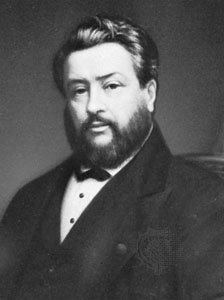
"A dog barks when his master is attacked. I would be a coward if I saw that God's truth is attacked and yet would remain silent."
John Calvin (1509-64)
Showing posts with label God's Plan. Show all posts

Wednesday, May 06, 2009

Does Calvinism kill Evangelism??

-Jon Irenicus

Many contenders of the Reformed theology are ignorantly accusing Calvinism of abrogating the importance and necessity of spreading the Good news (or Evangelism). The main question of the said accusation is with regards to the doctrine of Predestination. According to them (perhaps the Arminians in particular), if the Calvinist is correct that God has already planned long ago every individual's ends, then there would be no need for Evangelism. Christ's Great Commission to spread the Gospel to all nations will be of no usefulness for all elect will, in the end, be saved.

Correctly understood, however, the doctrine of predestination has several significant implications, especially in the field of Evangelism. Dr. Millard J. Erickson enumerates these positive implications of the doctrine:
  • 1) We can have confidence that what God has decided will come to pass. His plan will be fulfilled, and the elect will come to faith.
  • 2) We need not criticize ourselves when some people reject Christ. Jesus himself did not win everyone in his audience. He understood that all those whom the Father gave to him would come to him (John 6:37) and only they would come (v. 44). When we have done our best, we can leave the matter with the Lord.
  • 3) Predestination does not nullify incentive for evangelism and missions. We do not know who the elect and the nonelect are, so we must continue to spread the Word. Our evangelistic efforts are God's MEANS to bring the elect to salvation. God's ordaining of the end includes the ordaining of the means to that end as well. The knowledge that missions are God's means is a strong motive for the endeavor and gives us CONFIDENCE that it will prove successful [no matter what].
  • 4) [Grace is absolutely necessary. While Arminianism often gives strong emphasis to grace; in our Calvinistic scheme there is no basis for God's choice of some to eternal life other than his own sovereign will. There is nothing in the individual which persuades God to grant salvation to him or her.]
Predestination gives us the confidence to talk about the claims of Christ with other people. Predestination encourages evangelism because we can know that the God who sends us into the mission field is the same God who controls whatever happens. He is the same God who is able to turn the most sin-hardened heart to faith in an instant! Their stubborn free wills don’t matter—God can change them. God could change Paul, the worst enemy of the Christian faith, into the greatest of missionaries in a flash!

So, will Calvinism kill Evangelism? Charles C. Reisingler answers the question this way:

"The answer to the question is yes and no. Yes, it will kill unbiblical man-centered evangelism and some of the carnal unbiblical methods employed in man-centered evangelism.

No, it will not kill God-centered evangelism where biblical methods are employed in the great work of carrying out our Lord's clearest command." [Charles C. Reisinger, Will Calvinism kill Evangelism?]


Let us, therefore, preach the Gospel to all nations as Christ commanded!

___________

Tuesday, May 05, 2009

The New Testament view of God's Eternal Decree

The plan and purpose of God is also prominent in the New Testament. Jesus saw the events of his life and events in the future as necessarily coming to pass because of the plan of God. Jesus affirmed that God planned not only the large, complex events, such as the fall and destruction of Jerusalem (Luke 21:20-22), but details as well, such as the apostasy of and betrayal of Judas, and the faithfulness of the remaining disciples (Matt. 26:24; Marl 14:21; Luke 22:22; John 17:12; 18:9). The fulfilment of God's plan and Old Testament prophecy is a prominent theme in the writing of Matthew (1:22; 2:15; 23; 4:14; 8:17; 12:17; 13:35; 21:4; 26:56) and John (12:38; 19:24, 28, 36).

While critics may object that some of these prophecies were fulfilled by people who knew about them and may have had a vested interested seeing them fulfilled (e.g., Jesus fulfilled in Psalm 69:21 by saying, "I thirst" [John 19:28]), it is notable that other prophecies were fulfilled by persons who had no desire to fulfil them and probably had no knowledge of them, such as the Roman soldiers in their casting lots for Jesus; garment and not breaking any of his bones.

Even where there was no specific prophecy to be fulfilled, Jesus conveyed a sense of necessity (δεῖ) concerning future events. For example, he said to his disciples,
  • "And when you hear of wars and rumors of wars, do not be alarmed. This must take place, but the end is not yet. . . . And the gospel must first be proclaimed to all nations." Mar. 13:7 (CEV)
He also had a profound sense of necessity concerning what he must do; the Father's plan needed to be completed. Thus, he said,
  • ". . .I must preach the good tidings of the kingdom of God to the other cities also: for therefore was I sent." Luke 4:43 (BBE)
and also,
  • "Just as Moses lifted up the serpent in the wilderness, so must the Son of Man be lifted up, so that everyone who believes in him may have eternal life." John 3:14-15 (ISV)
We know that he had this consciousness already at the age of twelve, for when his worried parents found him in the temple, he responded,
  • ". . .Did you not know that I must be in my Father's house?" [literally, "in the things of my Father"] Luke 2:49 (CEV)
The apostles also laid emphasis upon the divine purpose. Peter said in his speech at Pentecost,
  • "this Jesus, delivered up according to the definite plan and foreknowledge of God, you crucified and killed by the hands of lawless men." Acts 2:23 (CEV)
And after Peter and John were released by the Sanhedrin, the disciples lifted their voices to God, noting that Herod and Pontius Pilate, together with the Gentiles and the people of Israel, had been gathered in Jerusalem "to do [against Jesus] whatever your hand and your plan had predestined to take place" (Acts 4:27-28, ESV). Peter also noted that various events which had occured were in fulfilment of the predictions of Scripture--the apostasy of Judas (Acts 1:16), the outpouring of the Holy Spirit (2:16-21), and the resurrection of Jesus (2:24-28). In writing the Book of Revelation the apostle John gave us a particularly striking example of belief in the divine plan. The not of certainty pervading the whole book, the entire series of events predicted there, derives from belief in God's plan and foreordination.

It is in Paul's writings that the divine plan according to which everything comes to pass is made most explicit. Everything that occurs is by God's choice and in accordance with his will (1 Cor. 12:18; 15:38: Col. 1:19). The very fortunes of nations are determined by him (Acts 17:26). God's redemptive works unfolds in accordance with his intended purpose (Gal. 3:8; 4:4-5).

The choice of individual and nation to be his own and the consequent events are God's sovereign doing (Rom. 9-11). Paul sees himself as having been set apart even before his birth (Gal 1:15). One might well take the image of the potter and the clay, which Paul uses in a specific somewhat narrow reference (Rom. 9:20-23), and see it as expressive of his whole philosophy of history. Paul regards "all things" that happen as part of God's intention for his children (Eph. 1:11-12). Thus Paul says that,

  • "And we know that God causes everything to work together for the good of those who love God and are called according to His purpose for them." Rom 8:28 (NLT)
And his purpose being that we might be "conformed to the image of his Son, in order that he [Jesus Christ] might be the firstborn among many brothers." Rom 8:29 (ISV)


The Old Testament view of God's Eternal Decree

In the Old Testament presentation, the planning and ordaining work of God is very much tied up with the covenant which the Lord made with his people. As we read of all that God id in choosing and taking personal care of his people, two truths about him stand out. On one hand, God is supremely powerful, the creator and sustainer of all that is. On the other hand is the loving, caring, personal nature of the Lord. He is not mere abstract power, but is thought as a loving person.

For the Old Testament writers, it was virtually inconceivable that anything could happen independently of the will and working of God. As evidence of this, consider that a common impersonal expressions like "It rained" are not found in the Old Testament. For the Hebrews, rain did not simply happen; God sent the rain. They saw him as the all powerful determiner of everything that occurs. Not only is he active in everything that occurs, but he has planned it. What is happening now was planned long ago. God himself comments, for example, concerning the destruction wreaked by the king of Assyria:
  • "Have you never heard that I planned all this long ago? And now I have carried it out. I gave you the power to turn fortified cities into piles of rubble." Isaiah 37:26 (GNB)
Even something as seemingly trivial as the building of reservoirs is described as having been planned long before (Isa. 22:11). There is a sense that every day has been designed and ordered by the Lord. Thus the psalmist writes,
  • "Thine eyes did see my substance, yet being unperfect; and in thy book all my members were written, which in continuance were fashioned, when as yet there was none of them." Pss. 139:16 (KJV)
A similar thought is expressed by Job (14:5). There is in God's plan a concern for the welfare of the nation of Israel, and of every one of God's children (Pss. 27:10-11; 37; 64:3; 91; 121; 139:16; Dan. 12:1; Jonah 3:5). We find in Psalms 91 and 121 a confidence in the goodness, provision, and protection of God that in many ways remind us of Jesus' teaching about the birds and the flowers (Matt. 6:25-29).

The Old Testament also enunciates belief in the efficaciousness of God's plan. What is now coming to pass is doing so because it is (and has always been) prat of God's purpose. He will most assuredly bring to actual occurrence everything in his plan. What he has promised, he will do. Isaiah 46:10-11 puts it this way:
  • "[I am God, and no other is God, even none like Me], declaring the end from the beginning, and from the past things which were not done, saying, My purpose shall stand, and I will do all My pleasure; calling a bird of prey from the east, the man of my purpose from a far country. Yes, I have spoken, I will also cause it to come; I have formed; yes, I will do it." Isaiah 46:10-11 (MKJV)
Similar statements are found in Isaiah 14:24-27. Here we read not only of God's faithfulness to his avowed purpose, but also of the futility of opposing it:
  • "For the LORD of hosts hath purposed, and who shall disannul it? and his hand is stretched out, and who shall turn it back?" Isaiah 14:27 (RV); cf. Job 42:2; Jer. 23:20; Zech. 1:6.
It is particularly in the wisdom literature and the prophets that the idea of an all-inclusive divine purpose is most prominent. God has from the beginning, from all eternity, had an inclusive plan encompassing the whole of reality and extending even to the minor details of life.
  • "The LORD has made everything for His own purposes, even the wicked for a day of disaster." Prov. 16:4 (NLT); cf. 3:19-21; Job 38, especially v. 4; Isa. 40:12; Jer 10:12-13.
Even what is ordinarily thought of as an occurrence of chance, such as the casting of lots, is represented as the Lord's doing (Prov. 16:33). Nothing can deter or frustrate the accomplishment of his purpose. Proverbs 19:21 says,
  • "Many are the plans in a man's heart, but it is the LORD's purpose that prevails." Prov. 19:21 (NIV); cf. 21:30-31; Jer 10:23-24.
We humans may not always understand as God works our his purpose in our lives. This was the experience of Job throughout the book that bears his name; it is articulated particularly in 42:3,
  • "Who is this that obscures my counsel without knowledge?' Surely I spoke of things I did not understand, things too wonderful for me to know." Job 42:3 (NIV)
Thus, in the view of the Old Testament believer, God had created the world, he was directing history, and all this was but the unfolding of a plan prepared in eternity and related to his intentions of fellowship with his people. Creation in its vast extent and the details of individual lives were included in this plan and would surely come to pass as God designed. As a result, the prophets could speak of coming events with certainty. Future events could be prophesied because God had planned them, and his plan would surely come to pas.